
What is robotic-assisted hip and knee replacement surgery?
Robotic-assisted hip and knee replacement surgery is an advanced technology used to enhance the precision and accuracy of joint replacement procedures. The technology assists the surgeon with pre-operative planning and implant positioning, helping to personalise the procedure to each patient's unique anatomy.
Although referred to as "robotic surgery", the procedure is performed entirely by Dr Naidu. The robotic system serves as a sophisticated surgical tool that assists him throughout the operation, combining advanced technology with surgical expertise.
How does robotic-assisted surgery work?
Before surgery, detailed imaging and surgical planning are used to create a three-dimensional model of the affected joint. This allows Dr Naidu to develop a personalised surgical plan tailored to the patient's anatomy and joint alignment.
During the procedure, the robotic system provides real-time feedback and guidance, helping to ensure precise bone preparation and accurate implant placement. This technology assists in optimising joint alignment and restoring natural joint function.
Potential benefits of robotic-assisted joint replacement include:
- Personalised surgical planning
- Enhanced precision and accuracy
- Improved implant positioning and alignment
- Potentially reduced disruption of surrounding soft tissues
- Potentially less post-operative pain
- Improved joint function and mobility
What should I consider before robotic-assisted surgery?
Patients who are suitable candidates for conventional hip or knee replacement surgery may also be candidates for robotic-assisted joint replacement.
Surgery is typically considered when symptoms continue to affect quality of life despite conservative treatment measures such as:
- Physiotherapy
- Weight management
- Activity modification
- Bracing
- Cortisone injections
- Pain-relieving medication
Before recommending surgery, Dr Naidu will perform a comprehensive assessment to determine whether robotic-assisted joint replacement is the most appropriate option for your individual needs.
All aspects of the procedure, recovery, rehabilitation, and expected outcomes will be discussed with you beforehand.
What should I know after robotic-assisted surgery?
Recovery following robotic-assisted joint replacement is similar to that of traditional joint replacement surgery, although some patients may experience earlier improvements in comfort and mobility.
Following surgery, you may work with a physiotherapist who will guide you through exercises and rehabilitation aimed at restoring strength, movement, and function.
After the procedure, you will receive:
- Pain medication to manage discomfort
- Antibiotics to reduce the risk of infection
- Preventative treatment to reduce the risk of blood clots (DVT)
- A personalised rehabilitation programme
Recovery timelines vary from patient to patient and depend on factors such as overall health, the complexity of the procedure, and commitment to rehabilitation. Dr Naidu will guide you through a tailored recovery plan designed to achieve the best possible outcome.
Frequently Asked Questions
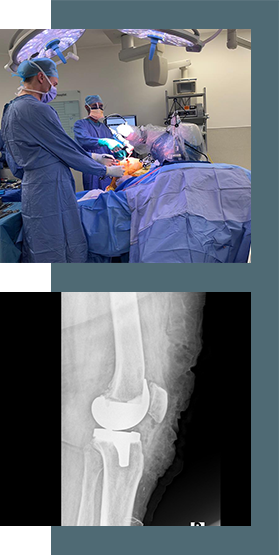
Watch Dr Naidu perform a Robotic knee replacement surgery.